
Vinted: Shop & sell pre-loved
VintedShopping
4.518.57K Reviews
- Version
- 26.41.1
- Installs
- 100.00M
- Age Rating
- Teen
Screenshots

Our Review of Vinted: Shop & sell pre-loved
 Analysis by Appyee
I use Vinted as a practical way to clear out clothes and discover second-hand pieces without turning the process into a full-time project. It is a free shopping app from Vinted, built around a community marketplace where people list pre-owned items and contact one another through the service. My experience is that its real appeal is not simply finding something cheaper; it is the combination of browsing, direct selling, and keeping unwanted things in circulation from one place.
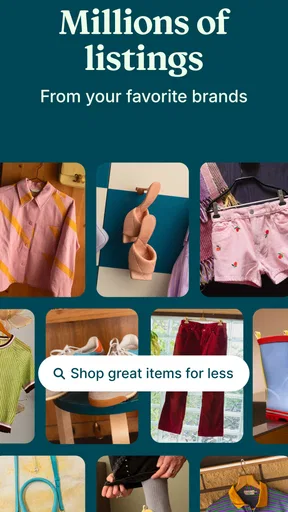
The app is aimed at teenagers and adults who are comfortable making decisions from photos, descriptions, and messages rather than walking into a shop. It has reached over 100 million installs and holds a 4.3 average from around 2.3 million ratings, so this is a large, active marketplace rather than a small local experiment. That scale can make it easier to find a particular size or style, although it also means the quality of listings varies from one seller to the next.
How Vinted works when you are actually trying to buy or sell
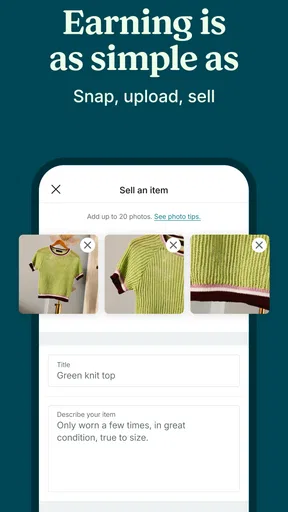
The basic rhythm is straightforward. As a buyer, I search through second-hand clothing and other pre-loved items, open listings, inspect the pictures, read the description, and decide whether the condition and asking price make sense. As a seller, I create a listing for something I no longer use, add photographs, describe its state, and wait for someone to show interest. The app is therefore useful in two directions: it can help me spend less on used goods, and it can turn things already sitting in my home into items someone else may want.
That two-sided design changes how I judge the app. A normal shopping app is mostly about selecting products from professional stock. Here, the listing itself is part of the product. One person may photograph an item carefully in natural light and explain every flaw, while another may provide a dark picture and a vague description. I have to evaluate the seller’s presentation as well as the item. This is the central skill required to use Vinted well.
The interface is most useful when I already know roughly what I want. Searching for a particular garment type, size, colour, or brand is more efficient than endlessly scrolling through the whole catalogue. Browsing is still enjoyable, especially when I am open to surprises, but it can become distracting because the marketplace contains so many individual listings. I recommend saving promising items and comparing them later instead of buying the first acceptable option.
What the free price really means
There is no charge to download and use the app itself. That makes trying it low-risk: I can look around, list an item, or decide that the marketplace is not for me without paying for access. The important distinction is that free access does not make every purchase free. The final cost of an item depends on the listing and the transaction details shown during the buying process, so I treat the displayed item price as the starting point rather than the complete value calculation.
This matters when comparing a used item with a new one. A second-hand bargain can stop being a bargain if its condition is poor, if the fit is uncertain, or if the total checkout amount is close to the price of a new alternative. I look at the whole decision: the item’s state, the seller’s description, the likely usefulness, and the complete amount presented before confirming. The app gives me access without an entry fee, but sensible shopping still requires arithmetic and patience.
For sellers, the free app can be valuable because it provides a place to test whether unwanted belongings attract interest. I would not treat every listing as guaranteed income. Preparing photographs, answering questions, packaging an item, and completing the handover all take time. The app removes much of the difficulty of finding an audience, but it does not remove the work involved in selling honestly and carefully.
Small habits that improve the buying experience
My first useful habit is to inspect photographs for consistency. If the item is shown from only one angle, I assume I need more information before deciding. I look for signs of wear around collars, cuffs, hems, soles, zippers, and printed areas, depending on what I am considering. When a detail affects the purchase, I ask a focused question rather than sending a vague message such as “Is it good?” A specific question about a mark, measurement, or missing component usually produces a more useful answer.
I also compare several similar listings before committing. This is not only about finding the lowest figure. A slightly more expensive item may be better photographed, more clearly described, or in noticeably better condition. On the other hand, an unusually cheap listing may make sense if it has visible wear that I can accept. The advantage of a person-to-person marketplace is choice, but choice only helps when I slow down enough to compare the evidence.
A less obvious workflow is to separate “want” from “maybe.” I save items that genuinely fit my needs, then return to them after the initial excitement has passed. This is especially helpful for fashion, where endless browsing can turn a practical search into impulse buying. I ask myself whether I would still want the item if it were the only listing available. If the answer is no, I leave it behind.
For clothing, I pay more attention to measurements than to the label alone. Sizes are not perfectly consistent across brands, cuts, or eras, and a second-hand purchase usually cannot be treated like trying something on in a shop. Comparing the listed measurements with a garment I already own is more reliable than guessing from a familiar size. This extra step is one of the best ways to avoid a disappointing purchase.
A realistic selling routine
When I sell, I begin by checking the item in good light. I photograph the front, back, label, important details, and any flaw that a buyer would reasonably want to know about. I do not hide wear in the hope that a buyer will overlook it. Clear disclosure may make a listing less glamorous, but it creates better expectations and reduces awkward conversations later.
I write descriptions that answer practical questions: what the item is, how it fits, what condition it is in, and whether there are marks, repairs, or signs of use. I avoid describing something as “like new” unless I would be comfortable defending that wording. On a marketplace built from individual listings, accurate language is a competitive advantage. Buyers are more likely to trust a seller who mentions a small imperfection than one whose description feels carefully incomplete.
Another useful approach is to list items as a small, organised group rather than photographing everything in a rush. I can prepare a few pieces, keep track of their condition, and respond consistently. This is particularly helpful when clearing a wardrobe after a change of size or style. The app can make listing feel easy at first, but a rushed batch of poor photos and incomplete descriptions creates more work when people ask basic questions.
I would also keep packaging in mind before listing bulky or fragile things. The app may connect me with a buyer, but I still need to be ready to prepare the item properly and follow the transaction steps shown in the app. If I am unwilling to pack something securely or communicate promptly, selling through a marketplace is probably not the right choice for that item.
The value, limitations, and right audience
I find Vinted most rewarding when I treat it as a place to make deliberate choices, not as a shortcut to guaranteed bargains. In this section, I weigh the time and judgement the marketplace asks of me against the flexibility it offers, so you can decide whether that trade-off fits your routine. The next section looks at how its current version and known release history frame what existing users can reasonably expect.
Where the app delivers genuine value
The strongest value is flexibility. I can use it for a focused search, such as replacing a worn-out jacket, or for a broader clear-out of things I no longer use. That makes it more useful than a conventional second-hand shop when I want both buying and selling in one place. I am not limited to whatever happens to be on a physical rack nearby; I can search a much broader pool of individual listings.
It is also helpful for people who care about extending the life of products. Buying pre-owned is not automatically the best choice in every situation, but finding a usable item that already exists can be more sensible than buying new simply because a new version is easier to locate. Selling gives the same idea a second side: an item that no longer suits me may still be exactly what another person needs.
The large user base is useful in a practical way. More participants generally mean more chances of finding a particular style, size, or unusual piece. It also means I need stronger filters and better judgement because the catalogue is not curated like a boutique. I see the scale as an advantage for discovery, not as a promise that every search will produce a perfect result.
Compared with donating everything or taking items to a traditional resale shop, Vinted gives me more control over the listing and the asking price. Compared with a general online classifieds service, it feels more focused on personal second-hand shopping. The trade-off is that I take on more responsibility: I must assess the listing, communicate with the other person, and make sure the item matches the description I am relying on.
The friction I would not ignore
The biggest weakness is inconsistency. The app can be polished while the marketplace remains unpredictable. Some listings are excellent, and others leave important questions unanswered. I cannot assume that a familiar brand name, attractive photograph, or low asking price tells me enough. The quality of the experience depends heavily on how carefully the individual seller has presented the item.
There is also a time cost. Searching, comparing, messaging, preparing listings, and organising items can take longer than buying from a normal retailer. If I need a specific product immediately, a local shop or a conventional online store may be better even when the second-hand option looks appealing. Vinted rewards people who can wait for the right listing rather than those who need certainty and speed.
Fit is another genuine risk, particularly with clothing and shoes. Photos cannot fully show texture, weight, smell, stretch, or how a garment sits on a body. Descriptions help, but they cannot replace trying something on. I would skip the purchase when the seller cannot answer a basic fit or condition question, especially if the item is expensive enough that a mistake would matter to my budget.
The social side can be both helpful and tiring. Direct messages allow clarification, but they also mean I am dealing with another person rather than an automated retailer. Replies may be brief, delayed, or incomplete. I see this as part of the marketplace model, not a fault that the app can completely solve. Anyone who dislikes negotiation or informal communication should consider whether the convenience is worth that trade-off.
Who will get the most from it?
I recommend it most to people who enjoy hunting for value and are willing to inspect details. It suits someone refreshing a wardrobe gradually, looking for a discontinued style, or trying to reduce clutter without simply throwing usable items away. It is also a good fit for a careful seller who can take honest photographs, describe condition accurately, and package items responsibly.
A realistic everyday example would be a parent clearing clothes that no longer fit a child. Instead of making one rushed trip to a resale shop, I could photograph the usable pieces, describe their wear, and list them while also searching for the next size up. The benefit is not just the possibility of saving money; it is the ability to manage both sides of a changing wardrobe in the same marketplace. The drawback is that I still need to sort, photograph, answer messages, and prepare each item.
Students and people furnishing a temporary lifestyle may also appreciate the flexibility of second-hand shopping. They can look for practical items without treating every purchase as a long-term investment. Still, I would compare the complete checkout amount and the item’s expected lifespan before assuming that used is automatically cheaper. A low initial price is not good value if the item needs immediate replacement.
I would tell a person to skip it if they want guaranteed condition, exact sizing, instant delivery, or customer service that handles every decision for them. It is also a poor match for someone who tends to buy impulsively while browsing. The abundance of listings can encourage unnecessary purchases, so the app works best when I arrive with a clear need or a firm plan to sell.
My verdict after weighing the trade-offs
Vinted is a worthwhile free shopping app when I treat it as a marketplace rather than a normal retailer. Its value comes from access to a broad pool of pre-owned listings and from the ability to sell my own unwanted items, not from removing every uncertainty from second-hand shopping. I appreciate that it can support practical, lower-waste habits while giving me more choice than a single local resale shop.
The app is currently version 26.33.0 and supports devices running Android 8.0 or later, which makes it accessible to many users with older Android phones. It is rated for teenagers, so younger users should still approach person-to-person buying and selling thoughtfully, with appropriate awareness of communication and transaction responsibilities.
My final advice is simple: use it when you have time to compare, ask precise questions, and judge condition realistically. Photograph flaws when selling, check measurements when buying, and review the complete cost before confirming a purchase. If you want a guaranteed product with predictable sizing and immediate certainty, choose a regular retailer instead. If you enjoy finding overlooked items and are prepared to do a little investigative work, this is one of the more useful ways to make second-hand shopping and selling part of an ordinary routine.
Privacy and Permissions
See what permissions an app requests and how it handles your data.
- Location
- approximate location (network-based), precise location (GPS and network-based)
- Photos/Media/Files
- read the contents of your USB storage, modify or delete the contents of your USB storage
- Storage
- read the contents of your USB storage, modify or delete the contents of your USB storage
- Camera
- take pictures and videos
- Wi-Fi connection information
- view Wi-Fi connections
- Other
- view network connections, connect and disconnect from Wi-Fi, full network access, reorder running apps, control vibration, prevent device from sleeping, Google Play license check, read Google service configuration
Verdict
Strengths of Vinted: Shop & sell pre-loved
- Easy listing process with photos, descriptions, and pricing tools.
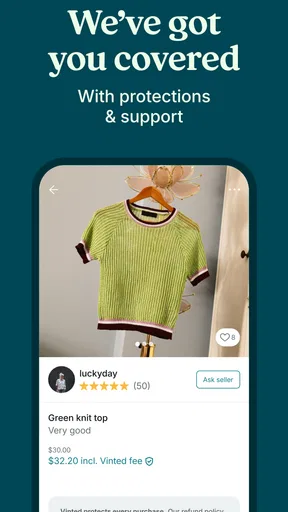
- Buyer protection adds reassurance when purchasing from other users.
- In-app messaging makes negotiating and asking questions convenient.
- Large community increases the chance of finding niche items.
- Shipping options can simplify transactions between different locations.
Limitations of Vinted: Shop & sell pre-loved
- Item condition and authenticity still depend heavily on the seller.
- Popular listings may receive many offers before you can buy them.
- Fees and shipping costs can reduce the value of lower-priced items.
- Disputes may take time to resolve if a transaction goes wrong.
- Search results can include repetitive or poorly described listings.
Similar Picks in This Category
View All
SHEIN-Shopping Online
Roadget Business PTE. LTD.4.8

Amazon Shopping
Amazon Mobile LLC4.4


Mercado Libre: Compras online
Mercado Libre4.8

Wish: Shop and Save
Wish US Holdings LLC4.7

Alibaba.com - B2B marketplace
Alibaba Mobile4.4
Frequently Asked Questions
What is Vinted: Shop & sell pre-loved, and how does it work?
Vinted is a marketplace for buying and selling pre-loved clothing, shoes, accessories, home items, and other second-hand goods. Sellers create listings with photos, descriptions, sizes, and prices, while buyers browse categories, message sellers, and purchase through the app. The platform generally supports in-app payments and shipping options, although available features can vary by country.
Is Vinted safe to use for buying and selling second-hand items?
Vinted includes features designed to make transactions safer, such as in-app messaging, user profiles, ratings, payment processing, and buyer protection for eligible purchases. However, users should still inspect listing photos and descriptions carefully, check seller feedback, and keep communication and payments inside the app. Avoid sharing unnecessary personal information or sending money through external services.
How much does it cost to sell items on Vinted?
In many markets, listing an item on Vinted is free, and sellers typically do not pay a standard selling commission. Buyers usually cover shipping and may also pay a buyer protection or service fee, depending on the country and transaction. Optional promotional tools, such as boosting a listing, can cost extra, so review the final amount before confirming.
How do shipping, returns, and refunds work on Vinted?
Shipping is usually arranged through options offered during checkout, with the available carriers and prices depending on the buyer’s location and the seller’s market. Buyers should inspect an order promptly after delivery and report problems through the app within the stated time limit. Returns, refunds, and disputes depend on the purchase issue, seller agreement, and Vinted’s current policies.
What should I check before downloading and using Vinted?
Before downloading Vinted, check whether the service operates in your country and whether its shipping, payment, and withdrawal options suit your needs. The app requires an account and may request personal, payment, and delivery information. Also review its privacy policy, notification settings, community rules, and current fees. A stable internet connection and accurate listing details are important for a smooth experience.
